Wednesday, February 19, 2014

Obama Administration Putting Government Monitors in Newsrooms

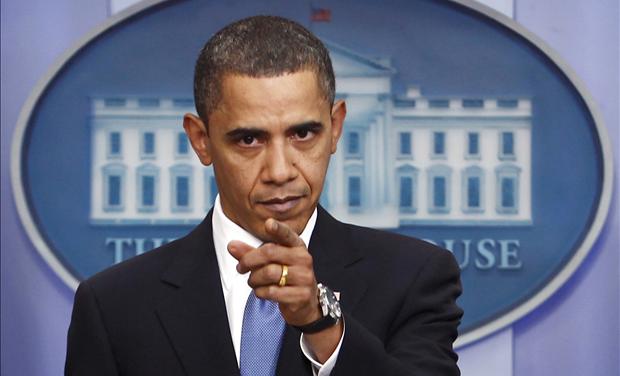
President Barack Obama

The Obama Administration’s Federal Communication Commission (FCC) is poised to place government monitors in newsrooms across the country in an absurdly draconian attempt to intimidate and control the media.
Before you dismiss this assertion as utterly preposterous (we all know how that turned out when the Tea Party complained that it was being targeted by the IRS), this bombshell of an accusation comes from an actual FCC Commissioner.
FCC Commissioner Ajit Pai reveals a brand new Obama Administration program that he fears could be used in “pressuring media organizations into covering certain stories.”
As Commissioner Pai explains in the Wall Street Journal:
Last May the FCC proposed an initiative to thrust the federal government into newsrooms across the country. With its "Multi-Market Study of Critical Information Needs," or CIN, the agency plans to send researchers to grill reporters, editors and station owners about how they decide which stories to run. A field test in Columbia, S.C., is scheduled to begin this spring.
The purpose of the CIN, according to the FCC, is to ferret out information from television and radio broadcasters about "the process by which stories are selected" and how often stations cover "critical information needs," along with "perceived station bias" and "perceived responsiveness to underserved populations."
In fact, the FCC is now expanding the bounds of regulatory powers to include newspapers, which it has absolutely no authority over, in its new government monitoring program.
The FCC has apparently already selected eight categories of “critical information” “that it believes local newscasters should cover.”
That’s right, the Obama Administration has developed a formula of what it believes the free press should cover, and it is going to send government monitors into newsrooms across America to stand over the shoulders of the press as they make editorial decisions.
This poses a monumental danger to constitutionally protected free speech and freedom of the press.
Every major repressive regime of the modern era has begun with an attempt to control and intimidate the press.
As Thomas Jefferson so eloquently said, "our liberty depends on the freedom of the press, and that cannot be limited without being lost."
The federal government has absolutely no business determining what stories should and should not be run, what is critical for the American public and what is not, whether it perceives a bias, and whose interests are and are not being served by the free press.
It’s an unconscionable assault on our free society.
Imagine a government monitor telling Fox News it needed to cover stories in the same way as MSNBC or Al Jazeera.  Imagine an Obama Administration official walking in to the editorial board of the Wall Street Journal and telling it that the American public would be better served if it is stopped reporting on the IRS scandal or maybe that reporting on ObamaCare “glitches” is driving down enrollment.
It’s hard to imagine anything more brazenly Orwellian than government monitors in newsrooms.
Is it any wonder that the U.S. now ranks 46th in the world for freedom of the press?  Reporters Without Boarders called America’s precipitous drop of 13 places in its recent global rankings “one of the most significant declines” in freedom of the press in the world.
Freedom of the press is proudly extolled in the First Amendment, yet our nation now barely makes the top fifty for media freedom.
We cannot allow the unfathomable encroachment on our free speech and freedom of the press to continue.
We’ve seen, and defeated, this kind of attempt to squelch free speech before in the likes of the Fairness Doctrine and the Grassroots Lobbying Bill(incidentally one of my first projects at the ACLJ).  Each one of these euphemistically named government programs is nothing more than an underhanded attempt to circumvent the Constitution and limit free speech – speech that the government finds inconvenient.  They’re equally unconstitutional, and they each must be defeated.

Black History Month Feature: Lynchings Of Black People In The Last Century (Jesse Washington)


Tuesday, February 18, 2014

Plan B! U.S. to Strike Syria Again and Launch From Jordan!

A rebel takes position at a damaged street in Old City of Aleppo. (REUTERS/Jalal Almamo)

BEIRUT:
Syrian and American officials traded blame Sunday for the failure of last week’s round of Geneva II peace talks, which sought an end to a three-year conflict that has claimed more than 140,000 lives, according to the latest estimates by pro-opposition activists.
U.S. Secretary of State John Kerry blamed “obstruction” by the regime of President Bashar Assad for the breakdown in talks.
“None of us are surprised that the talks have been hard, and that we are at a difficult moment, but we should all agree that the Assad regime’s obstruction has made progress even tougher,” Kerry said.
In a statement, Kerry urged the regime’s supporters to press for the creation of a transitional government, warning they would bear the responsibility “if the regime continues with its intransigence in the talks and its brutal tactics on the ground.”
The peace talks broke off Saturday with no tangible result and no date was set for a third round, but Kerry said Washington remained committed to the Geneva process and all diplomatic efforts to find a political solution.
“There’s no recess in the suffering of the Syrian people, and the parties and the international community must use the recess in the Geneva talks to determine how best to use this time and its resumption to find a political solution to this horrific civil war.”
More than 140,000 people have died and millions have been driven from their homes since the conflict began. The Britain-based Syrian Observatory for Human rights, which gave the new casualty estimate Saturday, said nearly 5,800 people had been killed since the Geneva talks began on Jan. 22.
For his part, Syria’s foreign minister accused the U.S. of trying to create a “negative climate” for dialogue at the second round of peace talks.
Walid al-Moallem made his remarks to state news agency SANA during the government delegation’s return to Damascus.
He said the United States tried to “create a very negative climate for dialogue in Geneva.”
“The second round did not fail, contrary to media analyses that have appeared and the reactions of the foreign ministers for France and Britain,” Moallem added. U.N.-Arab League mediator Lakhdar Brahimi ended the Geneva round Saturday without finding a way of breaking the impasse.
Brahimi told a news conference that both sides agreed that the agenda for the next round should focus on four points: ending the violence and terrorism, creating a transitional governing body, building national institutions and reconciliation.
To avoid losing another week or more before resuming discussions, Brahimi said he proposed that the first day should be reserved for talks on ending violence and combating terrorism, the main thrust of the government’s stance, and the second for talking about how to create a transitional body, as the opposition and Western powers insist.
“Unfortunately the government has refused, which raises the suspicion of the opposition that in fact the government doesn’t want to discuss the TGB [transitional governing body] at all,” Brahimi said.
“In that case, I have suggested that it’s not good for the process, it’s not good for Syria that we come back for another round and fall in the same trap that we have been struggling with this week and most of the first round,” he said. “So I think it is better that every side goes back and reflect and take their responsibility: Do they want this process to take place or not?”
Brahimi said he would consult Kerry, Russian Foreign Minister Sergey Lavrov and U.N. Secretary-General Ban Ki-moon about a way forward.
“I am very, very sorry, and I apologize to the Syrian people that their hopes which were very, very high that something will happen here,” Brahimi said.
The talks’ modest achievement has been a U.N.-brokered truce in the city of Homs that has allowed aid workers to deliver some food and medicine for hundreds trapped in the rebel-held areas. More than 1,000 people were also evacuated from the city, which has been under government blockade for more than a year.
An official with the Syrian Arab Red Crescent said Sunday its workers have entered the western Damascus suburb of Moadamieh to deliver food for the first time in 15 months of government blockade.
Khaled Erksoussi, the head of operations with the Red Crescent, told the Associated Press that the agency was allowed to take 500 food parcels into the suburb. A truce has been in place in the area for two months, Erksoussi said, but Moadamieh remains surrounded by army checkpoints and troops.
Erksoussi appealed for more aid to be allowed for at least 10,000 residents of the suburb, which was targeted by a chemical weapons strike in August.
As the Geneva process stumbled, signs mounted that foreign backers of the opposition would seek to shore up mainstream rebel groups.
The first tangible development came Sunday, when Gen. Salim Idriss, head of the Supreme Military Council of the Free Syrian Army, was replaced by Gen. Abdel-Ilah Bashir al-Nuaymi, the head of the Qunaitra Military Council.
There was speculation that the move was linked to the weekend’s about-face by Asaad Mustafa, the defense minister in the opposition’s interim government. Mustafa announced his resignation Friday, citing the failure of Geneva II, but then went back on his resignation.
And an article in the Wall Street Journal Saturday maintained that with the failure of Geneva II, sophisticated anti-aircraft weapons would shortly be making their way to the rebels.
The article said that Saudi Arabia and other Gulf backers have offered to provide Chinese man-portable air defense systems, known as “Manpads,” to the rebels, although the White House remains opposed to the transfer of such weapons, afraid that they might fall into the hands of extremists.
The article said the weapons would be transferred from Turkey and Jordan, while some analysts believe that the move will strengthen FSA groups in the south, led by Bashar Zoubi, a prominent rebel commander.
 
A version of this article appeared in the print edition of The Daily Star on February 17, 2014, on page 1.

Read more: http://www.dailystar.com.lb/News/Middle-East/2014/Feb-17/247578-us-syria-play-blame-game-over-geneva-peace-talks.ashx#ixzz2tj7dLIqg
(The Daily Star :: Lebanon News :: http://www.dailystar.com.lb) 

Monday, February 17, 2014

Untold History: More Than A Quarter of U.S. Presidents Were Involved in Slavery, Human Trafficking


As the country marks Presidents’ Day, we turn to an aspect of U.S. history that is often missed: the complicity of American presidents with slavery. “More than one-in-four U.S. presidents were involved in human trafficking and slavery. These presidents bought, sold and bred enslaved people for profit. Of the 12 presidents who were enslavers, more than half kept people in bondage at the White House,” writes historian Clarence Lusane in his most recent article, "Missing From Presidents’ Day: The People They Enslaved.”


Why Did Michael Vick Go To Prison Again...??? SMH

The ultimate dog's dinner: Hundreds of caged canines saved from the cooking pot by quick-thinking Chinese activists

Dogs destined to be slaughtered and served up in China's restaurants were saved when the truck transporting them was intercepted by animal rights activists.
The vehicle, carrying 505 canines packed into just 156 tiny cages, was stopped on Yunnan Province's highway from Fumin to Kunming after other drivers spotted its sickening cargo.
A number posted pictures and comments about the load on the Chinese equivalent of Twitter, Weibo, prompting the police to stop the lorry at the next toll gate.

Sickening: Dogs destined to be slaughtered and served up in China's restaurants were saved when the truck transporting them was intercepted by animal rights activists
Deaths: Due to the terrible conditions a number of the dogs had already died by the time they were discovered
It was then directed to a nearby police station where animal lovers, alerted to the news over the internet, began to arrive.
Sadly, due to the terrible conditions a number had already died by the time they were discovered.

One activist said: 'They were cramped together. A cage could be stuffed with seven to eight. Our hearts were broken in seeing that.'
Volunteers removed the cages from the lorry and spent the night feeding, watering and treating the animals.

Chinese dogsChinese dogs
Helping hand: Volunteers removed the cages from the lorry and spent the night feeding, watering and treating the animals

Deaths: Due to the terrible conditions a number of the dogs had already died by the time they were discovered
Helping hand: Volunteers removed the cages from the lorry and spent the night feeding, watering and treating the animals
Cramped: Activists said seven to eight dogs were packed into each cage
ChinaChina

Unbelievable: Horrifyingly, officers from the local Animal Inspection Department investigating the matter discovered that the transportation of the dogs was legal
Horrifyingly, officers from the local Animal Inspection Department investigating the matter discovered that the transportation of the dogs was legal.
The person who owned them did indeed have a licence and police were unable to act despite suspecting the dogs were headed for dog meat restaurants.
Another activist added: 'We can't stop them from eating dogs, as we don't have an animal welfare law. We just hope the government could stop dog mongers from doing dog business.'
However, a private dog rescue centre then stepped forward and brought all of the dogs off their owner for 60,000 Yuan (£5,900). 
The animals will now be cared for until new owners can be found for them.

Sad: The person who owned them did indeed have a licence and police were unable to act despite suspecting the dogs were headed for dog meat restaurants
Eleven countries around the globe still eat dog meat. They are: China, Indonesia, Korea, Mexico, Philippines, Polynesia, Taiwan, Vietnam, the Arctic and Antarctic and two cantons in Switzerland.
China: Although the Chinese were the first to domesticate the dog and keep them as pets, dog meat has been a source of food from at least the time of Confucius, and possibly even before.
Indonesia: Eating dog meat is usually associated with people from the Batak Toba culture, who cook a traditional dish named saksang that is like a dog-meat stew.
Mexico: Dogs were historically bred for their meat by the Aztecs. These dogs were called itzcuintlis, and were often pictured on pre-Columbian Mexican pottery.
Philippines: In the capital city of Manila,the law specifically prohibits the killing and selling of dogs for food except in certain circumstances including research and animal population control.
Polynesia: Dogs were historically eaten in Tahiti and other islands of Polynesia at the time of first European contact in 1769.
Taiwan: Dog meat in Taiwan is particularly eaten in the winter months, especially black dogs, which are believed to help retain body warmth.
Korea: Gaegogi literally means 'dog meat' in Korean. Gaegogi, however, is often mistaken as the term for Korean soup made from dog meat, bosintang. The distaste felt by dog lovers, particularly from the West, has made this dish very controversial.
Switzerland: According to a Swiss newspaper report in 1996, the Swiss rural cantons of Appenzell and St. Gallen are known to have had a tradition of eating dogs, curing dog meat into jerky and sausages, as well as using the lard for medicinal purposes.
Vietnam: Dog meat is eaten throughout Vietnam. To many Northerners, it is a popular, if relatively expensive, dinnertime restaurant meal.
Arctic and Antarctic: Dogs have historically been an emergency food source for various peoples in Siberia, Alaska, northern Canada, and Greenland. Sled dogs are usually maintained for pulling sleds, but occasionally are eaten when no other food is available.

Video Shines Light On The 'Disturbing Emotional Toll' Of Being Black At UCLA Law School


In an emotional video released earlier this week, students at the UCLA School of Law gathered to share their stories of being among the few black students on campus as part of an awareness campaign simply titled "33."
According to the video, out of roughly 1,100 students, 33 of them are black, that's three percent of the school's student population. Official statistics reveal there are a total of 994 students enrolled getting their Juris Doctor, however, an official from the school says the video's 1,100 figure likely includes students receiving their LL.M. (Master of Laws).
“I am so tired of being on this campus everyday and having to plead my humanity, essentially, to other students. I feel like an outsider constantly. I don’t feel like at my own school I can solely focus on being a student," one woman explained.
"It feels isolating. It feels horrible. It feels like there is a lot of pressure, a lot of weight. It feels like I don't belong. It feels unwelcoming and hostile,” another woman shared.
The students expanded upon their feelings of isolation, and feeling like they have to represent their entire community.
“It’s a constant burden of pressure. I’m constantly policing myself, just being aware of what I say and how it can be interpreted because I essentially am the representation of the black community.”
One woman felt she had been automatically characterized as an "angry black woman" after she disagreed with the views of a particular professor and openly vocalized her thoughts.
"The fact that I was a black woman played a lot into why people stopped listening to me. I felt like if there were maybe more black women in the class, maybe just five of us, people could have seen more of a variation in our responses to what was going on in class and what I felt like was sexism in the classroom."
Lately, students of color have been using the internet to raise awareness about diversity issues on their campuses. Just a few months ago, undergraduate students at UCLA released a video pointing out the fact that UCLA has more NCAA championships than black male freshmen. While students at the University of Michigan ignited a viral conversation on Twitter titled #BBUM (being black at the University of Michigan.)
UPDATE: 9 p.m. -- UCLA School of Law's Dean Rachel F. Moran provided the following response to HuffPost: "UCLA Law students eloquently have expressed their frustration and disappointment with the low number of African-American students at the law school. As a public law school that has always been committed to access and opportunity, we share their frustrations and we remain determined to do everything possible to increase the diversity of each incoming class. UCLA School of Law is committed to a culture of collegiality and collaboration. We are dedicated to fostering an atmosphere that is welcoming to all students and an environment that values and supports every member of our community.
I have been working with my administration to provide opportunities that facilitate constructive conversations for all of our students, and we are and will continue to be reaching out to provide additional support, hear their concerns and continue this important dialogue."

US airman stands his ground in Florida, sentenced to 25 years

Michael Giles

A former U.S. airman is currently sitting in a Florida prison for what his supporters argue was a simple act of self-defense.

Just two years into a 25-year sentence, he joins a list of cases that have drawn national attention to the Sunshine State’s sentencing and gun laws. Encouraged by the activity, his family is hoping to stir up interest in his case and is currently petitioning Florida’s governor for clemency.
In the spring of 2010, 26-year-old Michael Giles was on active duty with the Unites States Air Force and stationed in Tampa. The married father of three had recently finished two tours in the Middle East and was looking forward to a career in the military, says his family. One night in February, a friend invited Giles to party at a Tallahassee nightclub. Shorty after arriving, a fight broke out among members of fraternities from nearby Florida A&M University.
According to court documents, an argument quickly escalated into a brawl involving 30 to 40 young men.
Giles reportedly was not involved in the melee but, separated from his friends, went outside to the car where he had a gun, for which he had a concealed carry permit. Giles put the weapon in his pants pocket and searched the crowd for his friends. Suddenly, he says, someone from the crowd punched him. Knocked to the ground and in fear for his life, Giles says he pulled out the gun and fired one shot into the leg of his alleged attacker.
Three men were injured, wounded by bullet fragments. Giles was immediately arrested and charged with second-degree attempted murder.
Aside from his having no criminal background, Giles’ supporters argue that he was merely defending himself from an unprovoked attack. In fact, when testifying in the case, the man who punched Giles, Courtney Thrower, admitted that the assault was random. “The first person I get to I’m going to hit,” he remembered thinking.
Other witnesses testified that Thrower, having heard of an attack on one of his fraternity brothers, was outside of the nightclub pacing with his fists clenched and, in the middle of the brawl, “leapfrogged” from the crowd to hit Giles. Despite all of that, according to the Florida state prosecutors, Giles had no right to use deadly force that night.
“The evidence is clear here that the act of pointing a gun into a group of people, even if you’re not specifically deciding to kill them, is a crime,” said Assistant State Attorney Jack Campbell in his closing statements during the trial. “There is no self-defense that is applicable based on the evidence that’s before the jury.”
The defense argued, however, that Giles was justified in using deadly force if he reasonably believed that such force was necessary to prevent “imminent death or great bodily harm” to himself.
“He doesn’t have to think he’s going to get killed, even though people looking in from the outside thought someone could get killed,” said defense attorney Don Pumphrey in his closing. “If the defendant was not engaged in an unlawful activity and was attacked in any place where he had a right to be, where he had a right to stand, he had no duty to retreat and had the right to stand his ground and meet force with force, including deadly force.”
The jury disagreed however and Giles was ultimately convicted in August of 2011 of the lesser charge of aggravated battery with a deadly weapon, a crime that comes with a mandatory minimum sentence of twenty years in the state of Florida. It is the same sentence Marissa Alexander received in her controversial case – a case recently awarded a new trial on appeal.
“10-20-Life” (Florida Statute 775.087) is a controversial Florida law under which Giles and Alexander were sentenced. It confers a minimum sentence of 10 years for a felony conviction where a firearm is merely brandishing. Firing the gun adds another 10 years – even if no one was hit, as was the case with Alexander. And, if someone is hit, the shooter necessarily faces 25 years to life in prison.
“Frankly, I think the 25-year mandatory is overly harsh on the facts of this case, but that’s what the law requires I do and I intend to follow the law,” said Judge James C. Hankinson when issuing Giles’ verdict
Given the facts of the case, Giles’ supporters – led in an effort by his parents – are hoping to have his case reevaluated by the state. His mother, Phyllis Giles, has created an online petition through Change.org asking Florida Governor Rick Scott for executive clemency for her son. She claims that not only do the facts of the case show that Michael was reasonably defending himself, but that his lawyer pressured him against taking the stand and evoking a “Stand-Your-Ground” defense.
Giles’ new defense attorney is currently in the process of filing a motion for post-conviction relief, claiming that he received ineffective assistance of counsel and, so far, the petition for clemency has received more than 56,000 signatures.
Florida State Senator Dwight Bullard (D-39) has also written a letter to Gov. Scott asking him to commute Giles’ sentence. According to a statement to theGrio from Bullard’s office, he has received no response from the governor.
“As of yet our office has heard nothing from Gov. Scott’s office. His office has time and again proven non-responsive on issues related to injustice,” Bullard said in a statement to theGrio. “He subsequently has turned a definitive blind eye to high[-]profile plights of injustice involving African-Americans. His lack of intervention on behalf of Marissa Alexander and lack of compassion for the killings of Trayvon Martin and Jordan Davis have not gone unnoticed by Black Floridians – and all Floridians. So it comes as no surprise that he has been noticeably absent in the case of Michael Giles. Nonetheless I will continue pressing his office and others to take notice of cases like Mr. Giles, Ms. Alexander and others.”
In response, John Tupps, deputy press secretary for Governor Scott, told theGrio, “Florida is at a 42-year low in its crime rate, and Governor Scott works every day to ensure that Florida families are kept safe and have the opportunity to live the American Dream.”
Michael Giles supporters believe that’s not enough and are asking for direct action on his behalf. Ultimately, Phyllis Giles says she would like the state to take into consideration her son’s character and the extraordinary circumstance he was in the night of the shooting.
“Michael is a very caring person, never been in trouble, never been arrested. He’s a family man. We’re a bible-based family and both my husband and I are retired military,” she says. “We believe that we have raised a good man, so we don’t understand how the state of Florida could sentence him to 25 years in prison for defending himself. Michael is a good man. He is honest. He is hard working and, through all of this, he is our rock and confidence we need to keep fighting.”