Friday, February 7, 2020

Did you know Mississippi didn’t officially abolish slavery until 2013?


Two medical colleagues from Mississippi once noticed a historical oversight after watching a film about the final moves by U.S. President Abraham Lincoln to secure the 13th amendment that will abolish slavery.

Until February 7, 2013, that oversight was never corrected.

Essentially, the state of Mississippi had until that date not officially abolished slavery because it had never submitted the required documentation to ratify the 13th amendment.
The 13th amendment, which outlawed all slavery and involuntary servitude except as a punishment for a crime, was passed by the U.S. Senate on April 8, 1864, and by the House of Representatives on January 31, 1865.

That same year, 26 states ratified the law and in December of that year, the amendment was officially adopted into U.S. law after Georgia gave its approval, bringing the number to the required 27.

Scores of states waited years to ratify the amendment, with the last being Mississippi in 1995, but because the state never presented the ratification document to the U.S. archivist, it was never considered official.
Almost everyone had overlooked this clerical error until the movie that inspired Dr. Ranjan Batra, professor of Neurobiology and Anatomical Sciences at the University of Mississippi Medical Center, to look into the matter.

After watching Steven Spielberg’s Oscar-nominated film ‘Lincoln’, which focuses on the passage of the 13th amendment, Batra, who is an immigrant from India, knew that he needed to take action.

“At the end of the story there was an open question about how the ratification process proceeded,” he told ABC News. “Living in the South as I do, I found that a pretty big open question.”

Batra began his own investigations and subsequently noticed on the website usconstitution.net that there was an asterisk next to the state of Mississippi concerning the ratification of the 13th amendment.
“Mississippi ratified the amendment in 1995, but because the state never officially notified the US Archivist, the ratification is not official,” the statement on the website read.

Inspired further to resolve this oversight, Batra contacted his University of Mississippi Medical Center colleague Ken Sullivan, who was ready to help.

One of the first actions Sullivan took was to call the National Archives Office of the Federal Register, which confirmed that Mississippi had indeed not yet ratified the law.

The longtime resident of Mississippi then took a trip to the state archives to acquire a copy of the bill.

“The last paragraph [of the bill] directs the Secretary of State of Mississippi to inform the national archives of the law of the ratification which is exactly the way ratification is supposed to proceed, but that hadn’t been done for whatever reason,” said Batra.
Sullivan later watched ‘Lincoln’ with his family. There and then, he was moved further to help correct the error.

Sullivan contacted the office of Mississippi Secretary of State Delbert Hosemann, who agreed to file the required documentation to the National Archives and make the ratification official. On January 30, 2013, Hosemann sent the necessary paperwork to the Office of the Federal Register.

A week after, on February 7, 2013, Mississippi received word from the Office of the Federal Register that confirmed it had officially ratified the Thirteenth Amendment.

“We finally got it right,” said Senator Frazier, who helped develop the bill.

Sullivan, Batra and many others were, of course, elated that the error was fixed, considering Mississippi’s history with slavery.

In 1820, Mississippi had 33,000 slaves, and this number ballooned to about 437,00 after forty years, giving the state the country’s largest slave population, according to a report by Mississippi Encyclopedia.
New births did contribute to that astronomical figure, nevertheless, slave trade became a crucial part of Mississippians’ social and economic life, the report added.
“Few, if any, southern States received as many slaves and exported as few,” historian Charles S. Sydnor wrote.
https://face2faceafrica.com/article/did-you-know-mississippi-didnt-officially-abolish-slavery-until-2013

Friday, January 31, 2020

Russian TV Is Throwing Crazy Accusations At Bill Gates For The Coronavirus! #TalkThatShit

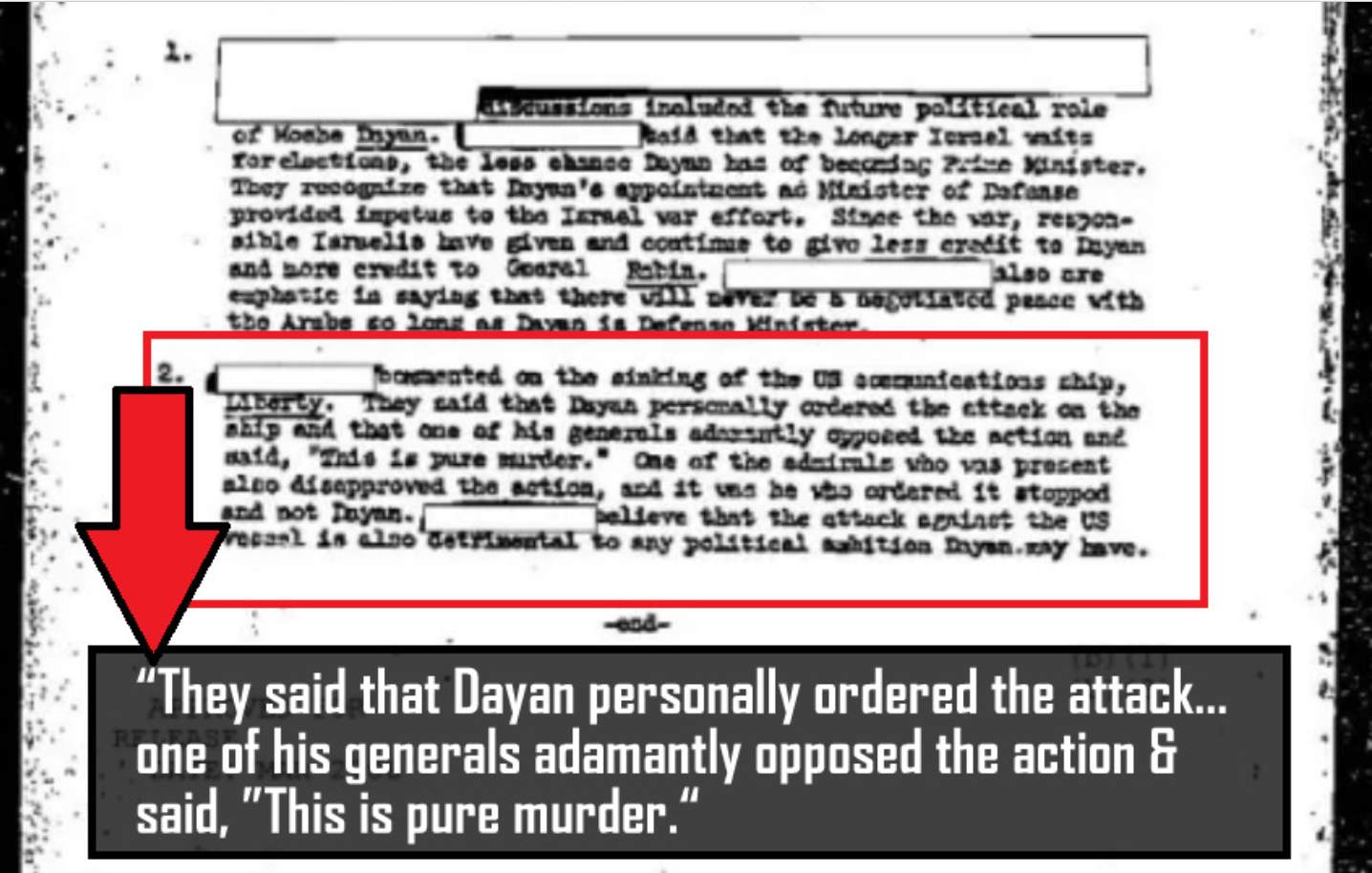
Declassified 1967 CIA memo makes it clear that Israeli Defense Minister Moshe Dayan personally ordered Israel's attack on the #USSLiberty.

Declassified 1967 CIA memo makes it clear that Israeli Defense Minister Moshe Dayan personally ordered Israel's attack on the #USSLiberty. An Israeli General called it "pure murder" & several pilots resisted orders to attack. Trump & #MAGA traitors support Israel over America.


3 years ago, Alan Dershowitz said Trump would be a corrupt president. Now he's part of his impeachment defense team.

Alan Dershowitz
Alan Dershowitz
Reuters/Andrew Innerarity
  • Alan Dershowitz said in the lead-up to the 2016 election that Donald Trump was more corrupt than Hillary Clinton.
  • "There's no comparison between who has engaged in more corruption and who is more likely to continue that if elected President of the United States," he said.
  • The former Harvard law professor is now defending the president in the ongoing impeachment trial.
  • Despite being a vocal opponent of Trump's views on various matters, Dershowitz said he is representing the president "on principle."
Constitutional lawyer Alan Dershowitz said in 2016 that Donald Trump was more corrupt than Hillary Clinton and could be expected to continue being corrupt if he was elected president.
Now, Dershowitz is a member of the president's impeachment defense team.
Dershowitz, a retired Harvard Law School professor, made the comments while appearing on the radio show Trending Today USA in 2016, in response to a question about the Clinton Foundation, as CNN reported.
"When you compare that to what Trump has done with Trump University, with so many other things, I think there's no comparison between who has engaged in more corruption and who is more likely to continue that if elected President of the United States," he said. "So I think what we're doing is we're comparing, we're saying, look, neither candidate is anywhere close to perfect, let's vote for the less bad candidate."
In this image from video, Alan Dershowitz, an attorney for President Donald Trump, speaks during the impeachment trial against Trump in the Senate at the U.S. Capitol in Washington, Monday, Jan. 27, 2020. (Senate Television via AP)
Associated Press
Trump University was a for-profit real estate training program that became defunct amid fraud allegations and class action lawsuits. In February 2018, a federal judge upheld an agreement that required the president to shell out $25 million to settle three lawsuits. Trump claimed that he could have won the case at trial, but instead chose to focus on his duties as president.

Dershowitz also criticized Trump in his book 'Electile Dysfunction'

The radio interview wasn't the only time the constitutional scholar and criminal lawyer criticized Trump during the run-up to the election. 
In his 2016 book, titled "Electile Dysfunction: A Guide for Unaroused Voters," Dershowitz described Trump as a "destabilizing and unpredictable candidate" who "openly embraces fringe conspiracy theories peddled by extremists," NBC News reported.
He also wrote that Trump blatantly disregarded political, personal and professional protocol.
Dershowitz described Trump as a New York City real estate mogul who became "famous for firing people; has exploited bankruptcy laws to hurt small-business owners, workers, and other creditors; has insulted large groups of people comprising a majority of voters (women, Latinos, the physically challenged, Muslims); has used vulgar words on TV that offend Christians, parents of young children, and family-oriented people of all backgrounds."
FILE - in this Dec. 24, 2019, file photo, President Donald Trump speaks to attorney Alan Dershowitz, right, as he arrives for Christmas Eve dinner at Mar-a-lago in Palm Beach, Fla. Retired law professor Alan Dershowitz says he hasn't changed at all and has a long history of representing people whose views he doesn't necessarily agree with. Dershowitz is part of President Donald Trump's defense team at the Senate impeachment trial. (AP Photo/Andrew Harnik, File)
Associated Press
Dershowitz also seemed concerned by Trump's foreign policy views, saying that it was evident he was "prepared to violate existing international and domestic laws, as well as widely accepted principles of human rights."
Worse still, he wrote in the book, was how Trump had "lurched into the realm of dog-whistle anti-Semitism by half-heartedly courting the support of white-nationalist bigots."
Dershowitz, as a guest on the Jamie Weinstein Show, also noted that Trump appeared to lack the guts to challenge the so-called alt-right movement when he was a guest
"I think he's a canny politician and he knows he can't win this election without the alt-right — without getting people to vote for him, whose views he disapproves of. But he hasn't had the courage to really stand up to the alt-right in the way he should," he said.
Observing a "kind of fascist mentality" permeating society, Dershowitz said he didn't "worry that Donald Trump will try to govern that way." He was worried, however, that Trump would "embolden and strengthen some of the fascist elements in our society."

Dershowitz said he was campaigning for Hillary Clinton at the time

When asked about his past commentary on the president, Dershowitz told NBC News: I was campaigning for Hillary Clinton at the time. I hadn't really ever met President Trump and it was just typical campaign rhetoric. I would not repeat that characterization today having met him."
Dershowitz recently made headlines for contradicting a constitutional stance he took former President Bill Clinton's impeachment trial. In 1999, he said that there "doesn't have to be a crime" to impeach a president; it's enough if the president is "somebody who completely corrupts the office."
alan dershowitz impeachment
AP Photo/J. Scott Applewhite
Now, however, he is asserting that "criminal-type behavior is required." Dershowitz plans to argue that the offenses Trump was charged with — abuse of power and obstruction of Congress — aren't actual crimes so can't justify ousting him from office. 
In an opinion letter to The New York Times, Dershowitz answered the lingering question of why he said "yes to Trump."
"I have stood on principle, representing people with whom I disagree as well those with whom I agree. I have never made a distinction based on partisanship," he wrote.