Wednesday, October 19, 2016

Texan students storm out after professor says we’re all of African descent


Some Texas State University students in Dr. McGee’s Cultural Anthropology class left the lecture hall after he said in a lesson that all living people originated in Africa. As the exiting white students left the classroom, some remaining in class reportedly called after them, “Black Lives Matter.”
The lecture started out with a message from the professor that the day’s class would be a lesson on race and it would be particularly interesting so everyone should listen, said Justine Lundy, 20. The professor began talking about the Black Lives Matter movement and how it had come about before stating that all living beings descended from east Africa.
“It was dead silent,” Lundy said, before a student retorted with a “sarcastic ‘sure.'”
My Professor just said all living ppl are descendants from Africa and ppl got up and walked out and now their arguing ðŸ’€ðŸ’€ðŸ’€
At that point, students began to leave the class. A few disagreeing students who didn’t leave the classroom in a huff stayed behind to argue with each other.
“A lot of people left,” said class attendee Karene Taylor, 19. “It was embarrassing.”
Lundy said she was pretty sure it was the talk of Black Lives Matter that primed students to argue and leave, even though “[McGee] wasn’t picking sides or anything — he kept reiterating that.” The African descent component was probably “the straw that broke the camel’s back,” she said.
Me in class yesterday watching all those people leave after what Prof. McGee said 
McGee said he himself didn’t witness any outright dissent but because the class is so large, “it is possible that someone didn’t like the topic and walked out.”
He is — as his credentials, years of research and general expertise would suggest —  not wrong on the subject. The so-dubbed “out of Africa” theory is widely accepted as our definitive origins by the scientific community. The University of Cambridge’s Andrea Manica and his team spent years of research comparing thousands and human skulls as recently as 2007 to prove that, yup, we all originated solely in Africa.

“As a whole, I think the group is open-minded,” McGee said. “Understanding other peoples’ perspectives is a basic part of cultural anthropology.”

Plane passenger who pulled off Muslim woman's hijab and shouted 'this is America' is fined £815

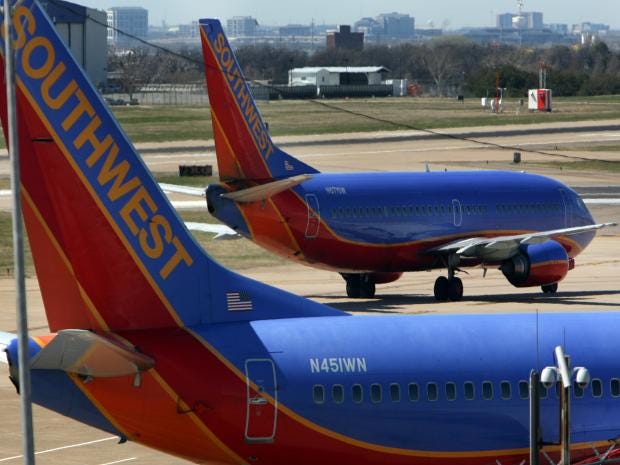
southwest-planes-generic.jpg
The woman said she was scared to leave her home after the incident 

An apologetic Gill Parker Payne said he was drunk on the flight and has since visited a mosque

A man has been sentenced for pulling off a Muslim woman’s hijab and shouting “this is America” on a flight.
Gill Parker Payne, from Chicago, was fined £815 and ordered to a year’s probation including two months of home detention.
The 37-year-old admitted saying something to the effect of “take it off! This is America” while flying between Chicago to Albuquerque in New Mexico.
According to the Albuquerque Journal, US attorney Damon P. Martinez said: “The case sends a clear message to anyone who contemplates the use of threats or intimidation to interfere with the right of individuals, including members of our Muslim community, to express their faith without fear.”
Payne was sitting a few rows behind victim Khawla Abdel-Haq on the Southwest Airlines flight in December 2015.
Payne admitted in a statement: “I stopped next to her seat, looked down at K.A., and told her to take off her hijab, stating something to the effect of ‘take if off! This is America’.”
The court heard Ms Abdel-Haq was scared to leave her home for weeks after the in-flight tirade.
She said at the sentencing on Tuesday: “You hurt me, you disrespected me, you violated me.”
An apologetic Payne said he was drunk on the flight, and has since visited a mosque, adding: “I’m embarrassed. I’m 100 per cent embarrassed.”

Vinegar Mother - "Sunny Seat" (Official Video)


Visit Vinegar Mother:
Vinegar Mother Official Site: http://www.VinegarMotherMusic.com
Facebook: https://www.facebook.com/VinegarMothe...
Instagram: https://instagram.com/VinegarMotherMusic
Twitter: https://twitter.com/vinegar_mother
SoundCloud: http://bit.ly/VinegarMotherSoundCloud

#WhiteLives Have Always Mattered In America !!


Tuesday, October 18, 2016

Asma Assad Defends Syrian Regime In Rare Interview


She’s rejected offers to leave the country, she said.


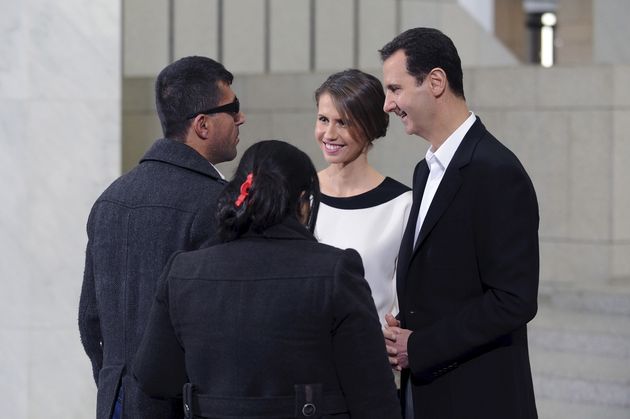
Asma Assad, the first lady of Syria and wife of Syrian leader Bashar Assad, has spoken out for the first time in several years.
In a 33-minute interview with Russia’s Channel 24, she took the opportunity to promote her development initiatives, defend her husband’s policies and argue that Syria will rebuild itself. The interview, conducted in English, was posted Tuesday on the YouTube channel run by the Syrian presidency.
Hundreds of thousands of people have died in Syria’s civil war and almost 5 million have been forced to flee, causing a refugee crisis in the Middle East and Europe. Assad’s choice to speak out comes at a time when her husband’s alliancewith Russia appears to be stronger than ever, and bloodshed across the country continues unabated. 
In her interview, the Syrian first lady expressed her gratitude to the “real friends of Syria” ― Russia and Iran ― who came to the country’s aid after other countries, including the United States, imposed sanctions. 
“Ironically, Western media organizations have chosen to solely focus on the plight of refugees and those caught up in rebel-held areas whereas, in fact, the vast majority of people are living across the country and these people, as much as anybody else, matter,” she said. 
REUTERS/SANA/HANDOUT VIA REUTERS
Syrian President Bashar Assad and first lady Asma Assad in Damascus on March 21, 2016.
Born Asma Akhras, the Syrian first lady is a British-Syrian dual citizen who grew up in London, the child of a cardiologist father and a diplomat mother. A former investment banker, she married Bashar Assad shortly after he assumed leadership of Syria in 2000.
Her last interview, which the Assad family had hired a PR firm to set up, was with American Vogue in December 2010, right before Syria’s civil war erupted in 2011. The author, Joan Juliet Buck, described the family as “wildly democratic.” Following widespread criticism, the article was later removed from Vogue’s website.
Assad said her role as first lady “has always been to strengthen Syrian social fabric and support its local communities.” 
“More specifically, this translates to promoting initiatives that encourage inclusive economic growth ... working with civil society organizations to make them stronger and working with young people to ensure they have the right skills and abilities so they can reach their full potential,” she added.
Her programs continue uninterrupted, she said. “They’re very well-established, and if anything, they have become more important since the beginning of the war.”
Her priority, though, has shifted to “helping martyrs’ families,” she said. She specifically mentioned prosthetics for the injured and work opportunities for widows.
“If I’m helping Syrians, then ultimately, I’m helping the president as well,” she said. 
Syria’s civil war began when dissidents, who took to the streets to protest peacefully, were brutally suppressed. The Syrian government has gone to serious lengths to either kill or detain innocent people, according to Amnesty International. A United Nations investigation found that Bashar Assad carried out crimes against humanity, including using chemical weapons on his people. 
Assad said the war has not changed her husband: “He is very calm, he is very thoughtful, you can talk to him about anything and everything.” The only difference is that his responsibilities are much greater than they used to be, she added.
JAWAD AL RIFAI/ANADOLU AGENCY/GETTY IMAGES
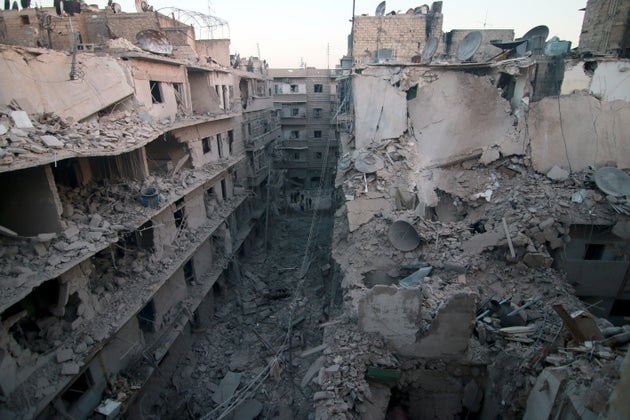
Buildings destroyed by Russian airstrikes in the Bustan Al-Qasr neighborhood of Aleppo, Syria, on Oct. 18, 2016.
According to the interviewer for Russia’s Channel 24, Syria’s first lady has a reputation for forgoing security measures and recently drove her own car on a recent hospital visit.
“I refuse to live in fear. Everybody in Syria is at risk today, how should I be different?” Assad asked. “How can I encourage people to continue living their lives?”
“I know that Syria can and will rebuild itself,” she continued. “What’s important is that we tackle the internal and external factors that prolong the war.”
Assad is also hopeful about the future of her country and has no intention of seeking asylum elsewhere, even though she’s been offered the opportunity, she said.
“I’ve been here since the beginning and I never thought of being anywhere else at all,” she said, explaining that she was offered opportunities to leave that included safety and financial security. “It doesn’t take a genius to know what these people were really after. It was never about my well-being or my children’s. It was a deliberate attempt to shatter people’s confidence in their president. And suffice to say, these offers were foolish and not even made by people who were Syrian.”
Millions of other Syrians have fled, however, as previous attempts to reach aceasefire deal have collapsed and the self-described Islamic State continues to wield its influence
Meanwhile, the Syrian regime has been bombing the city of Aleppo with Russian help in an attempt to regain control from rebels. Russia has announced a pause in the airstrikes to be held on Thursday. Around 250,000 people remain stranded in the eastern portion of the city, including some 100,000 children.

Nate Parker Interview With The Breakfast Club (10-6-16)


Monday, October 17, 2016

Clinton Campaign Nixed Ban On Funds From Foreign Registered Agents

“How do we explain to people that we’ll take money from a corporate lobbyist but not them? Or that the Clinton Foundation takes money from foreign governments but now the campaign won’t?"
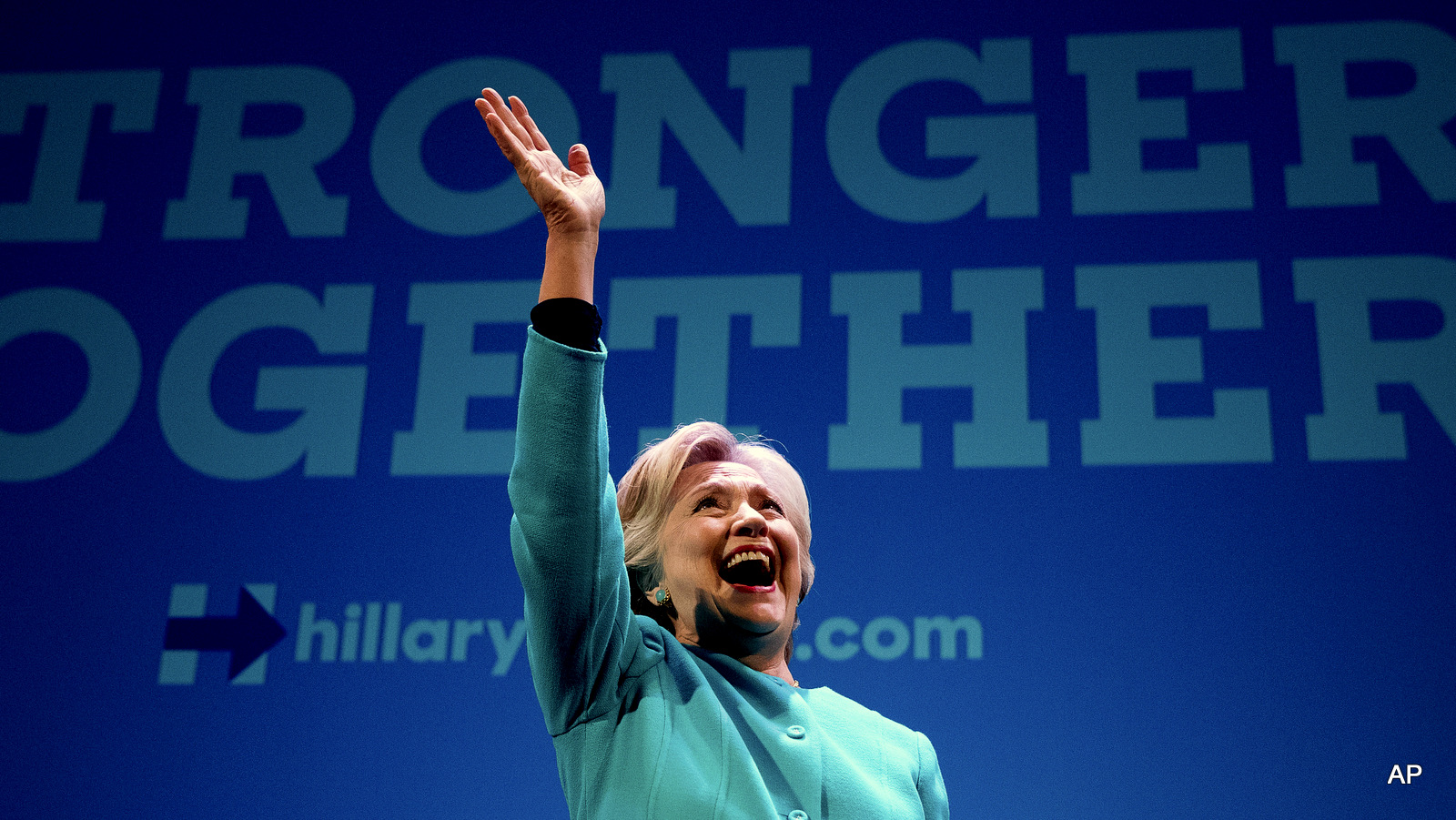
Democratic presidential candidate Hillary Clinton waves as she takes the stage to speak at a fundraiser at the Paramount Theatre in Seattle, Friday, Oct. 14, 2016.


Published in partnership with Shadowproof.

Emails from Hillary Clinton’s presidential campaign, which were published by WikiLeaks, reveal details on how the campaign decided whether to allow “foreign registered agents” to raise money for them. One email even lists the names of 23 individuals out of more than 350 prospective bundlers considered by the campaign.
On April 13, 2015, Dennis Cheng, the campaign’s finance director, said, “We really need [to] make a policy decision on this soon—whether we are allowing those lobbying on behalf of foreign governments to raise [money] for the campaign,” or whether a decision would be made on a case-by-case basis.
Karuna Seshasai, a campaign staff member involved in reviewing bundlers, shared a list, which included such foreign registered agents as Tony Podesta, who represented the interests of Iraq, Azerbaijan, and Egypt; John Merrigan, who represented the interests of the United Arab Emirates; and Ben Barnes and Wyeth Wiedeman, who represented the national board trying to recover looted and disguised funds for the transitional government of Libya.
Seshasai indicated if the campaign chose to make decisions on a case-by-case basis she would flag Podesta, Merrigan, Barnes, and Wiedeman.
As described on the Justice Department’s website, the Foreign Agents Registration Act (FARA) is a “disclosure statute that requires persons acting as agents of foreign principals in a political or quasi-political capacity to make periodic public disclosure of their relationship with the foreign principal, as well as activities, receipts and disbursements in support of those activities.”
In simpler terms, Americans who raise money on behalf of foreign governments have to register with the United States government.
On April 14, Seshasai summarized a conference call, writing, “The policy would be to not allow any currently registered foreign agents (those who register with FARA) to contribute or raise for the campaign. If someone terminates their registration, they would be allowed to contribute or raise for the campaign.” However, no final decision was made yet.
Cheng urged everyone to come to a consensus as soon as possible, “as our friends who happen to be registered with FARA are already donating and raising.” He pushed back, “I feel like we are leaving a good amount of money on the table,” both for the primary and the general election and then for the Democratic National Committee and state parties.
“How do we explain to people that we’ll take money from a corporate lobbyist but not them?” Cheng asked. Or that the Clinton Foundation takes money from foreign governments but now the campaign won’t?
Marc Elias, a general counsel for the campaign, discouraged a “bright line rule.”
“It seems odd to say that someone who represents Alberta, Canada can’t give, but a lobbyist for Phillip Morris can,” Elias suggested. “Just as we vet lobbyists case by case, I would do the same with FARA. While this may lead to a large number of FARA registrants being denied, it would not be a flat out ban. A total ban feels arbitrary and will engender the same eye-rolling and ill will that it did for Obama.”
Elias additionally advocated the campaign look at “who the donor is and what foreign entity they are registered for. In judging whether to take the money, we would consider the relationship between that country and the United States, its relationship to the State Department during Hillary’s time as Secretary, and its relationship, if any, to the Foundation.”
“In judging the individual, we would look at their history of support for political candidates generally and Hillary’s past campaigns specifically,” Elias continued. “Put simply, we would use the same criteria we use for lobbyists, except with a somewhat more stringent screen.”
By April 16, Cheng suggested the campaign was near the “point of no return” and needed to make a decision.
Robby Mook, campaign manager, responded later that day, “Marc [Elias] made a convincing case to me this am that these sorts of restrictions don’t really get you anything,” and, “Obama actually got judged MORE harshly as a result. He convinced me.”
“So, in a complete U-turn, I’m okay just taking the money and dealing with any attacks. Are you guys okay with that?” Mook asked.
Jennifer Palmieri, the campaign’s communications director, replied, “Take the money!”
By this time, Podesta had donated $5,000 to Clinton’s super political action committee, Ready PAC, which was started to “push” her to run for president. Barnes donated $5,000. Merrigan donated $2,700 on April 15, the same period when this discussion took place within the campaign.
The following are the other lobbyists registered as foreign agents, who the campaign believed would help raise money for their campaign:
—Imaad Zuberi of Beltway Government Strategies, Inc., who represented the Office of the Monitoring MP for the Ministry of External Affairs of the Democratic Socialist Republic of Sri Lanka
—Heather Podesta, who represented the interests of the Taipei Economic and Cultural Representative Office in the United States.
—John Breaux of Patton Boggs, who represented the interests of the Kurdistan regional government
—Jonathan Jones of Peck Madigan Jones, who represented the Embassy of New Zealand
—Michael Smith of Cornerstone Government Affairs, who represented the Justice Equality Movement Embassy of the Republic of Korea
—Paul Brathwaite of the Podesta Group, who represented the Embassy of Japan, Federal Republic of Somalia
—Tom Daschle of the Daschle Group, who represented the Taipei Economic and Cultural Representative Office in the United States
—Larry Rasky of Rasky Baerlein Strategic Communications, who represented the Socialist Party of Albania and the Serbia Investment and Export Promotion Agency
—David Castagnetti of Mehlman Vogel Castagnetti, who represented the Embassy of Panama and province of Alberta, Canada
—Gerald Cassidy of Cassidy & Associates
—Gov. Jim Blanchard of DLA Piper US LLP
—James “Jimmy Ryan of Elmendorf Ryan, who represented the Colombian Foreign Investment and Export Promotion Agency
—John Quinn of Quinn Gillespie & Associates, who represented the Japan External Trade Organization
—Kelly Bingel of Mehlman Vogel Castagnetti, who represented the Embassy of Panama and province of Alberta, Canada
—Mike Driver of Patton Boggs, who represented the Al-Hamar Trading Group
—Norm Brownstein of Brownstein Hyatt Farber Schreck
—Steve Elmendorf of Elmendorf Ryan, who represented the Colombia Foreign Investment and Export Promotion Agency
—Vic Fazio of Akin Gump Strauss Hauer & Feld, who represented the Hong Kong Trade Development Council